
the 88 Modern Constellations
Focusing on the Constellation Phoenix album. The essence of the stars and some deeper meaning.
The Constellation Phoenix: A Philosophical Gaze Upon Cosmic Rebirth
As the Constellations Jazz Orchestra unveils “Phoenix,” part of our “88 Modern Constellations” series, we invite you to look beyond the immediate grandeur of the music and ponder the profound philosophical currents that flow from its namesake: the Constellation Phoenix. This is not merely an astral arrangement of distant stars; it is a cosmic echo of a fundamental principle woven into the very fabric of existence, and, by extension, into the heart of artistic creation.
At its core, the Phoenix, both myth and constellation, is a cosmic affirmation of cyclicality and transformative becoming. It challenges our often-linear perception of time and progress. In a universe that appears to expand infinitely, with a beginning in the Big Bang and a potential end in heat death, the Phoenix introduces a counter-narrative: that of inevitable return, not to sameness, but to renewed possibility through annihilation.
Consider the dialectic of destruction and creation inherent in the Phoenix myth. This isn’t a simple “goodbye, then hello.” It’s a profound “through destruction, therefore creation.” The old form must utterly cease to be for the new, perhaps improved, form to emerge. Philosophically, this touches upon:
- Heraclitus’s Flux: “No man ever steps in the same river twice, for it’s not the same river and he’s not the same man.” The Constellation Phoenix embodies this perpetual state of becoming. Just as its stars are in constant motion, evolving over eons, so too is life, thought, and art. The “Phoenix” album, then, isn’t a static monument, but a snapshot of an ongoing musical evolution, acknowledging that even this creation will eventually give way to new forms.
- Nietzsche’s Eternal Recurrence (with a twist): While Nietzsche posited the same events recurring infinitely, the Phoenix offers a more hopeful, perhaps less crushing, interpretation. It’s not the same bird that returns, but a new, more vibrant one, carrying the essence of its past but unburdened by its limitations. For the artist, this means embracing the iterative process: each composition, each performance, is a “phoenix moment,” a chance to burn away what doesn’t serve the vision and rise with greater clarity.
- The Philosophy of Improvisation: In jazz, especially, the Phoenix finds its ultimate philosophical expression. Every solo is a micro-phoenix. A musician must “destroy” pre-conceived notions, burn through clichés, and leap into the unknown, trusting that from the ashes of expectation, something truly unique and vital will emerge in real-time. This act of spontaneous creation is a profound act of faith in the transformative power of the present moment.
Furthermore, the Constellation Phoenix speaks to the nature of enduring spirit beyond material form. The stars themselves are not immortal; they too are born, live, and die, often in spectacular fashion. Yet, the constellation endures as a recognized pattern, a human construct imposed upon the cosmic chaos, representing an archetype. This suggests:
- The Persistence of Ideas: Like the constellation, certain artistic ideas, melodic motifs, or rhythmic sensibilities persist across generations, even as the specific manifestations change. The “spirit of jazz” is phoenix-like; it continually reinvents its body while its essence remains.
- Art as a Vessel for Transcendence: Through the music, we engage with something that transcends the individual notes, instruments, or even the musicians themselves. We touch upon a universal truth about renewal and the indomitable will to create. The “Phoenix” album aims to be a temporary vessel for these enduring cosmic ideas.
Finally, the Phoenix offers a powerful meditation on the necessity of surrender for growth. The mythical bird does not cling to its past form; it willingly submits to the consuming fire. For us, both as artists and individuals, this translates to:
- Embracing Failure as Fuel: Every “failure,” every creative dead end, every dissonant chord, can be the very ash from which a new, more resonant idea can arise. The fear of burning prevents the rebirth.
- Letting Go of Perfectionism: True creative vitality often emerges not from meticulous planning alone, but from the courageous act of releasing control and allowing the spontaneous, alchemical process to unfold.
The Constellation Phoenix, therefore, is more than a celestial body; it is a profound philosophical statement. It reminds us that endings are merely the fiery crucible of new beginnings, that destruction is a prelude to creation, and that true vitality lies in the courageous embrace of eternal becoming. As you listen to “Phoenix,” we hope you not only hear the music, but also feel the pulsating rhythm of cosmic renewal reverberating through every note.



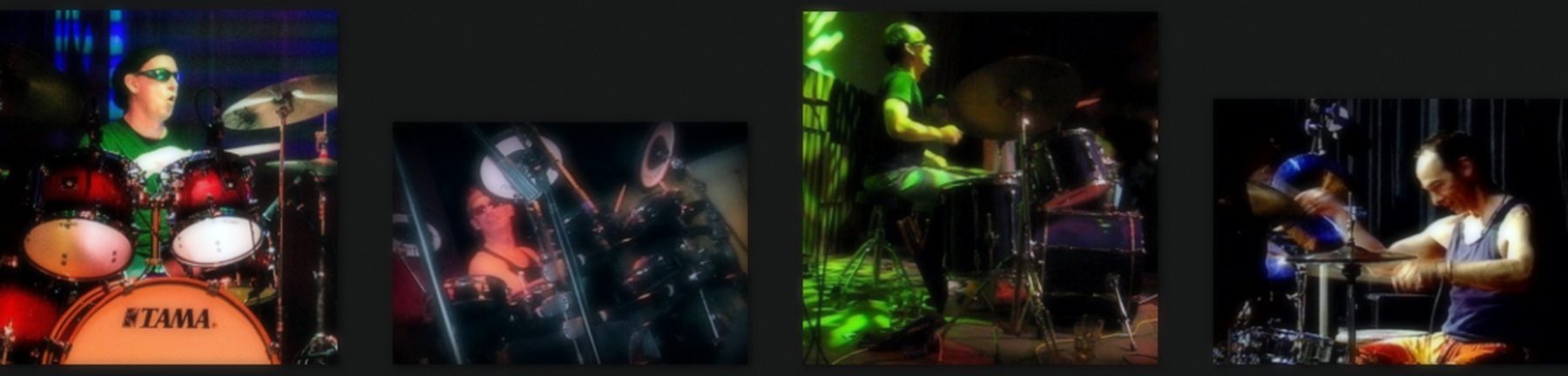
 chris olds ~ the drumulator